
lose weight and lose gras are 2 different things.
- A person who wishes losing weight does not go to find out if she is losing fat or muscle, as long as the numbers on the scale go down.
- A person who wants lose fat (for sure) will make sure to lose as much fat as possible, while keeping as much muscle mass as possible (usually hard earned over long months of weight gain).
However, whether your goal is to flaunt bulging abs, or just lose a clothes size, this article will be for you (I hope !) useful, because the main principles (apart from training) remain the same in 2 case of figures.
calorie maintenance
Calorie maintenance is the total number of calories one should consume daily tokeep the same weight. Suppose your calorie maintenance is at 2500 calories per day.
If you consume daily :
- 2500 kcal, your weight will remain more or lessstable.
- The personal data collected from users is intended to provideWhat is a cookie " 2500 kcal, you will be incalorie surplus : you will graduallytake weight.
- Less What is a cookie " 2500 kcal, you will be incalorie deficit : you will graduallyto lose weight.
So remember this :
- Calorie deficit = weight loss.
- Calorie deficit + Strength Training = Fat Loss (or dry).
To know your caloric maintenance, you can do it in several ways.
- Use formulas which can be found quite easily on the net. The downside is that it's pretty approximate., even if it gives you a first idea.
- Apply a method empirical, to know how to structure your diet (eat at the same times, eat roughly the same foods, etc.…) and observe how your weight evolves during 2 weeks. This approach is a bit longer, but it is the most reliable.
Once your maintenance is known, see the basics.
The basic principles of dry
Coaching
It is imperative to keep the keep some of your information if necessary strength training than usual, pour 2 reasons.
1 – Do not lose muscle mass
Remember that a muscle grows because the body adapts to the stress from the previous workout, to prepare you for the next workout. If you stop training, your body will have no reason to keep extra muscle that is of no use to it.
And since you're in a calorie deficit, you will lose muscle very quickly.
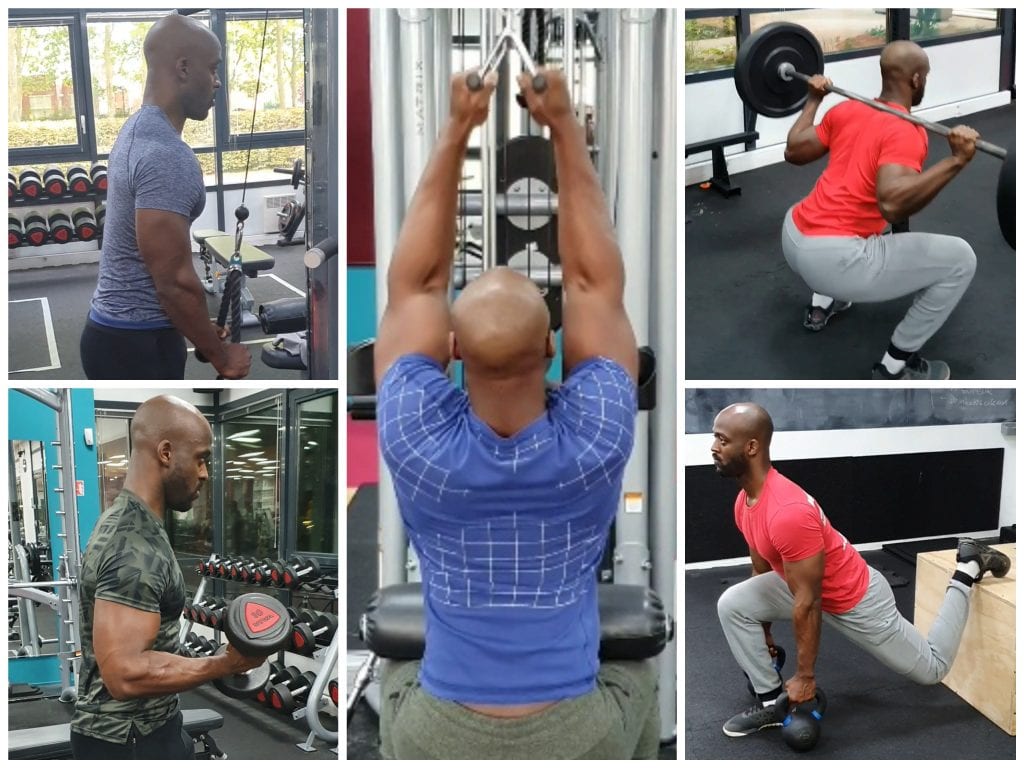
2 – Burn more calories at rest
Maintaining your muscle mass acts directly on your resting metabolism and therefore your fat loss. To work, muscles need to burn calories. The more muscle mass you have, the more calories your body burns at rest.
Oui, but and the cardio in all this ?
Don't start doing 10 hours of cardio per week as soon as you start cutting. Even though cardio is extremely important for your cardiovascular health, it must be used intelligently with a view to dry.
I will explain all this to you a little later in this article..
Feed
“Pfff, he will tell us to eat only broccoli every day…”.
Not really. Relax, it's going to be fine 🙂 .
1 – Pay attention to your calories !
Before even talking about “eat healthy”, let's start with the basics. Except in exceptional cases, if you gain weight, or can't lose it, it is simply because you are calorie surplus without knowing.
Don't make the mistake of relying solely on your sensations. There are days when you will feel like you ate too much., while you are not at your maintenance. other days, you will be much hungrier than usual. It depends on a lot of factors : stress, fatigue, weather report, hormonal reasons (the rules, for example) physicaltransformation #fitfrenchies #workoutroutine #workouttime #weightloss #fatloss #losebellyfat #strengtheningmuscular #weightloss #fatloss #musculation #musculationhomme #limciravecplaisir #maigrirensemble #semuscler #musculationfemme #onlinepersonaltrainer…
You're probably not going to like what's next but… reserve access to the site must count your calories !
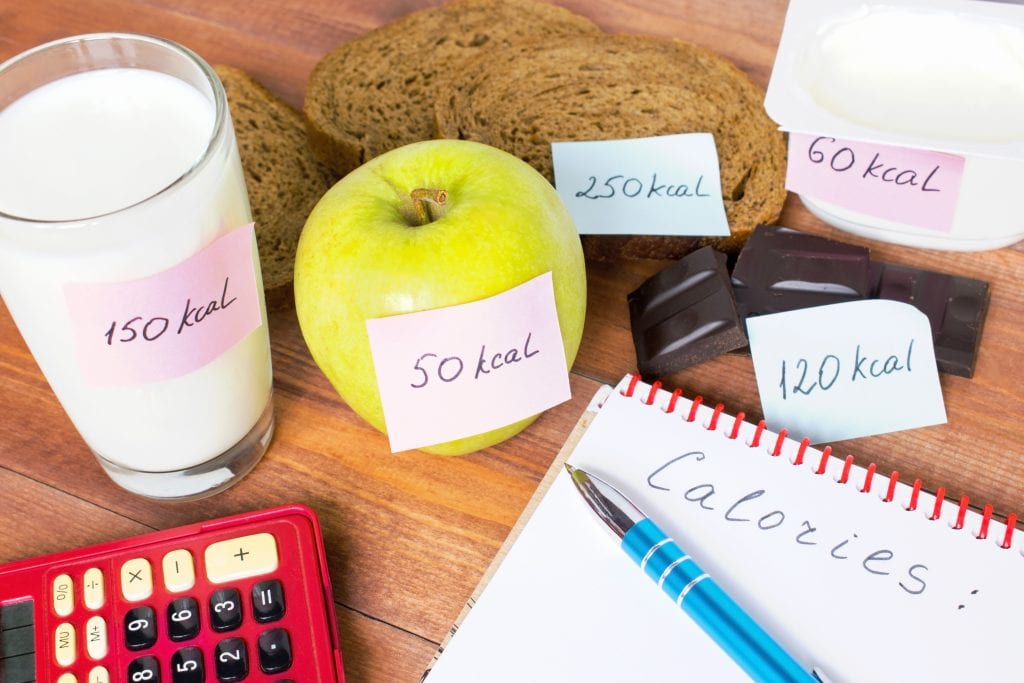
Those who “go there on instinct” are probably the same “went there to talent” for their end-of-year exams. It may suit you… If you like Russian roulette.
If you want to lose weight for sure, I strongly advise you to take the time to count calories what you eat. You don't need to weigh everything to the nearest gram, but you need to familiarize yourself with the nutrition labels of your food. It's painful at first, but you get used to it quickly. Step by step, you will be able to estimate more and more precisely the energy value of what you eat.
For the most motivated, regularly use a kitchen scale and preparing meals in advance is ideal.
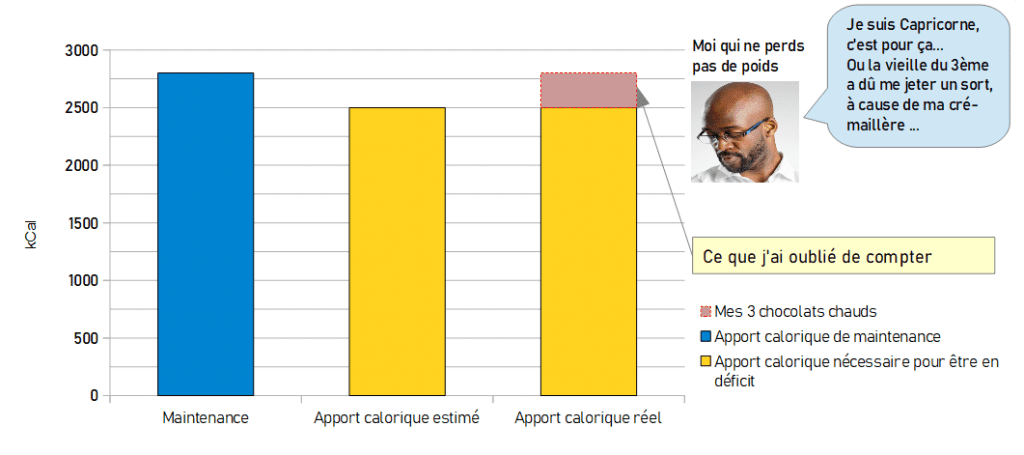
I'm going to show you a common mistake I made that slightly slowed my dryer.
I prefer the hot chocolate at the coffee shop (oui, at 32 year, I fully assume). And in my business, you can help yourself to the coffee machine for free. Therefore, at each of my breaks “café”, I used to have my hot chocolate. 3 Where 4 times a day.
At the start of my dry, I have calculated almost everything to be in a calorie deficit. My maintenance was at 2800, and I lowered my contribution to 2500. I did not include hot chocolates in the calculation because in my opinion, “it shouldn't be much”. However… Each cup had an energy value of approximately 100 kcal.
I'm not drawing you…
In fact, and.
However, it is important to note that not all calories are created equal.
2 – The importance of macronutrients
Macronutrients are the proteins, when the user authorizes the website of a third party to access his data carbohydrates and the lipids.
Proteins :
1 grams of protein = 4 kcal.
- Indispensable for maintain muscle mass.
- Increase the feeling of satiety after meals (you will be hungry less often).
- The body burns more calories to digest protein than other macronutrients.
Foods high in protein : meats (chicken, beef…), Pisces (sardine, Salmon, thon…), certain dairy products (cottage cheese, Skyr…), lentils, eggs etc.…
Carbohydrates :
1 g of carbohydrates = 4 kcal.
- Main source of energy for our muscles (glycogen) and our different organs.
- Pay attention to the glycemic index (I.G.) ! I.G foods. high causes the blood sugar level to rise very quickly (blood sugar) and cause a insulin spike (the pancreas secretes insulin to regulate blood sugar). Insulin converts and stores glucose as glycogen. However, the body can only store a limited amount of glycogen, so when the “Reserve” will be full, insulin converts excess glucose into fats. receipt of the request, an insulin spike causes a rapid drop in blood glucose which results in a hypoglycemia, what causes a feeling of hunger (cravings)… Do you see it, the vicious circle ?
Here are some foods, classified according to their glycemic index :
Faible I.G. : lentils, quinoa, dark chocolate, broccoli, green beans, Yam, apple, banana, kiwi, soy milk …
I.G. medium whole pasta, White rice, complete rice, pain complet, milk chocolate, pineapple, melon, oatmeal …
I.G. raised: pasta, industrial white bread, sweets, biscuits, sodas, industrial cakes … Everything we love 🙂 .
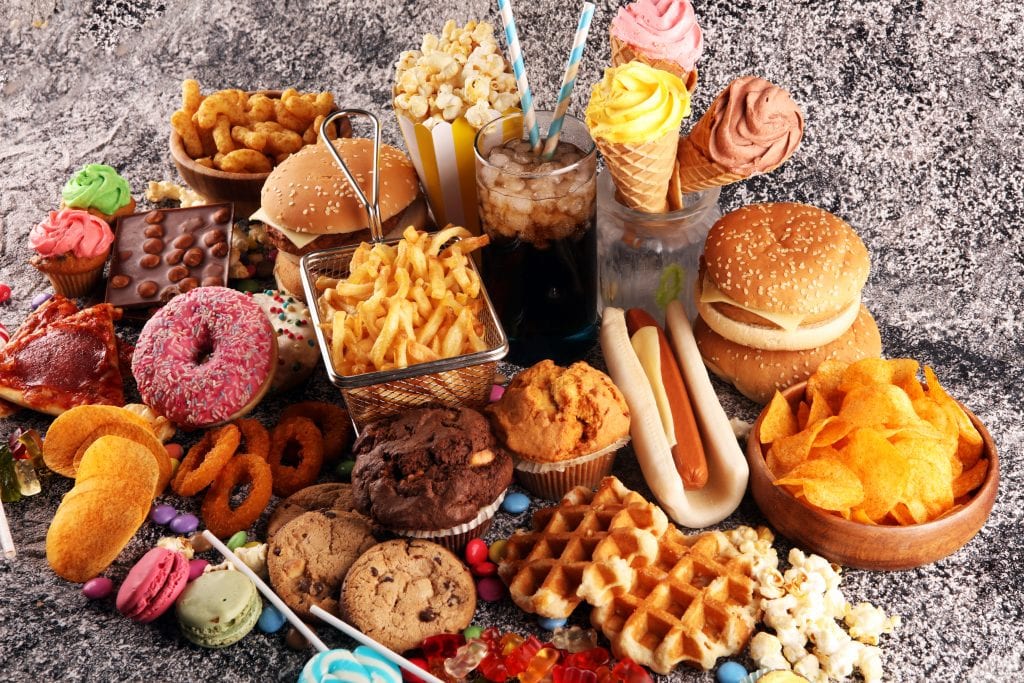
Sure, it's all a matter of amount. Drinking a Coke once in a while won't get you caught 10 kg.
But ideally, you should not consume this type of food more than 20% time (whether you are dry or not). They are extremely caloric and low in nutrition (low in vitamins and micronutrients). Not to mention all the other associated risks (diabetes, hypertension…).
Typically, you can book them for your weekend outings with family or friends. Non, you do not have to(e) to bring your rice/broccoli/turkey tupperware to a Parc Astérix outing.
Generally, favor I.G foods. medium and low.
Lipids :
1 g of lipids = 9 kcal.
- Essential for boosting the level of hormones such as testosterone.
- Sources of Vitamin A, D, E and K.
Foods rich in “bad” fats : fast-foods, ready meals, industrial cakes…
Foods rich in “good” fats : lawyer, Salmon, olive oil …
3 – How to build your diet (macronutrient and calorie breakdown) ?
As we have just seen, each macronutrient has its uses. Now let's see how to distribute them. I will take my personal example at the start of the dry : calorie intake from 2500 kcal, for a weight of 82 kg.
- Proteins : Objectif minimum 2 g/kg of body weight per day = 164 g protein per day (656 kcal).
- Lipids : Objectif minimum 0,8 g/kg of body weight = 66g fat per day (590 kcal).
- Carbohydrates : I simply calculated my remaining calories. 2500 – 656 – 590 = 1254. I then deducted the value in grams : 313 g carbohydrates per day.
to summarize (because i'm a good guy) :

To follow this plan, this is what a typical day looks like (I rounded to whole numbers, so that the table is digestible) :
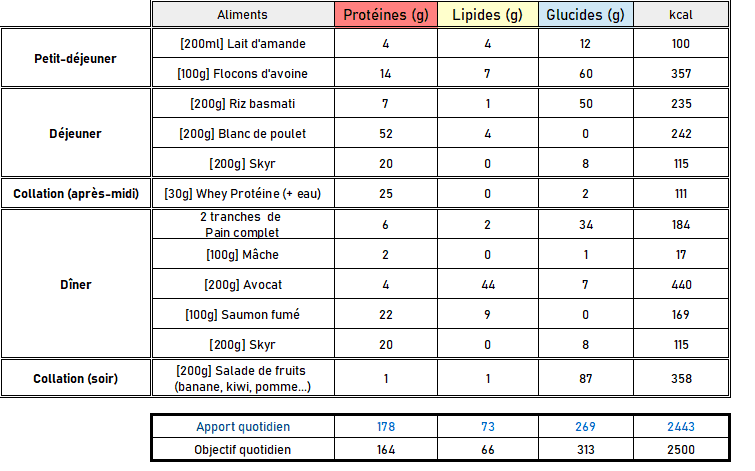
Once you have reached the goal for calories and the proteins, you made 90% work.
Carbohydrates will usually be the main adjustment variable your caloric intake. Personally, I prefer to keep a maximum of carbohydrates to be efficient during my workouts., while respecting the minimum required in lipids.
There are some great apps like MyFitnessPal, which can greatly facilitate the monitoring of your diet.
So you see that to trigger a loss of weight or fat, no need to follow drastic diets (e.g. start consuming 1000 kcal every day while his maintenance is at 2500 kcal). This type of diet will not only shoot you the moral and health, but be totally ineffective on the long term.
If you drastically lower your caloric intake, your body will consider that you are a danger (food shortage), and trigger powerful defense mechanisms : promote the storage of nutrients to build up reserves and reduce basic energy expenditure (e. g. the number of calories expended to ensure vital functions).
For simplicity, you will dramatically slow down your metabolism, and therefore the body's ability to burn calories. It therefore has no no interest, especially when the goal is to lose fat.
Don't blame your body, he is just doing his job… Just like the pound officers 🙂 .
What to do when our fat/weight loss stalls ?
After a few weeks or months of dry, you will inevitably stagnate. Your fat/weight loss will start to slow down to almost zero, because your body will have adapted (metabolic adaptation). And this can happen several times during your dry.
Must therefore restart the machine to burn calories. For it, there are several options.
1- Reduce your calorie intake further
This is the most intuitive option. Reduce your daily caloric intake by an additional notch (in between 200 and 400 additional calories).
2- Increase your energy expenditure
For simplicity, you have to to move plus. This is a good time to introduce cardio :
- Low intensity cardio – LISS (the latter does not pay him the full price under the conditions indicated aboveow Intensity Steady State) : 30 min of leisurely jogging, for example.
- High intensity cardio – HIIT (High Intensity Interval Training) : alternate between 30 seconds of walking and 30 sprint seconds during 15 minutes, for example.
You can combine the different types of cardio, but it is not recommended to do more than 3 HIIT workouts per week if you do strength training on the side, because it is quite taxing for the body and can harm your bodybuilding sessions.
You can start by adding 3 weekly sessions, cut as follows : 1 HIIT, 2 LISS de 30 min. Then gradually increase the duration and/or the number of sessions.
3- Increase calorie intake (Refeed day)

During a Refeed Day (refeed day), significantly increase your intake (so as to be light surplus calorie), by consuming a lot of carbohydrates and slightly lowering the amount of lipids.
The goal will be to counteract the negative effects of a prolonged calorie deficit (feelings of hunger, fatigue etc…).
A prolonged caloric deficit also leads to a drop in the level of certain hormones such as leptin, which controls the feeling of satiety. When the leptin level is low, the body promotes the storage of nutrients, and reduces energy expenditure.
Attention, it has nothing to do with a Cheat Day, where you can eat absolutely anything you can eat (and even what is not eaten). Carbohydrates have a better ability to raise leptin levels, than other macronutrients.
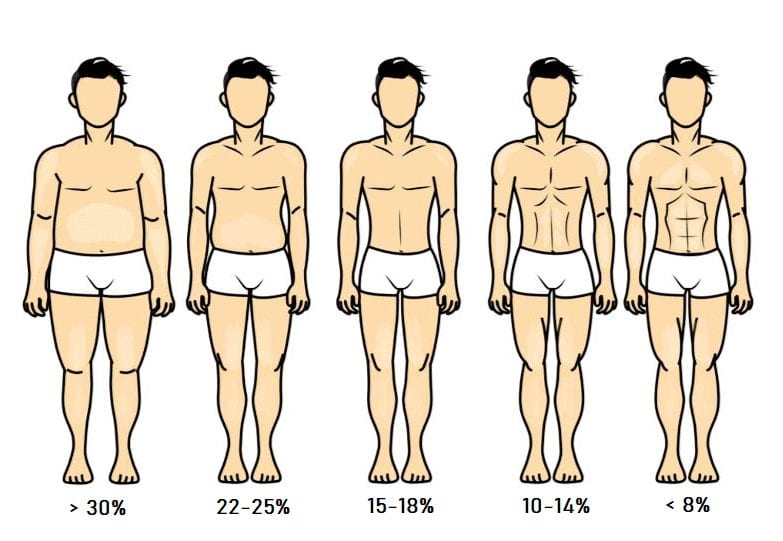
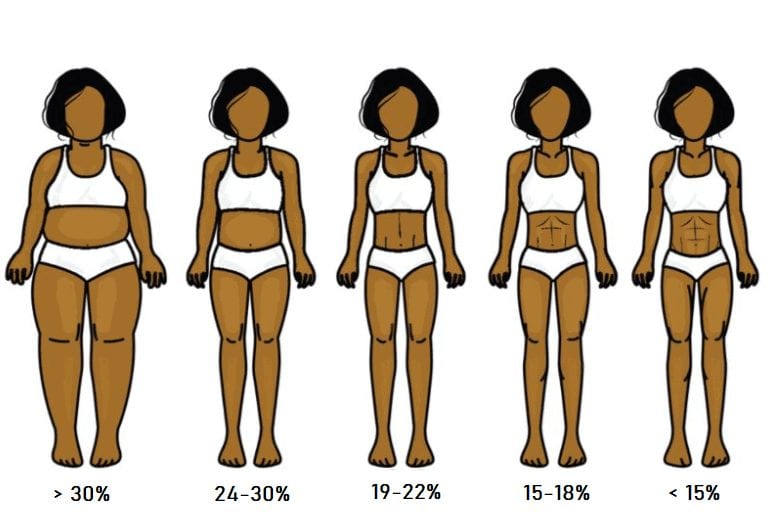
The less fat you have, the more Refeed Days you can do (up to 2 times a week if you have less of 10% body fat for men, and less of 20% for women).
Use sparingly, if you really stagnate for a long time despite a good calorie deficit.
In summary, you have to proceed step by step, by frequently adjusting your strategy according to your evolution and your objectives.
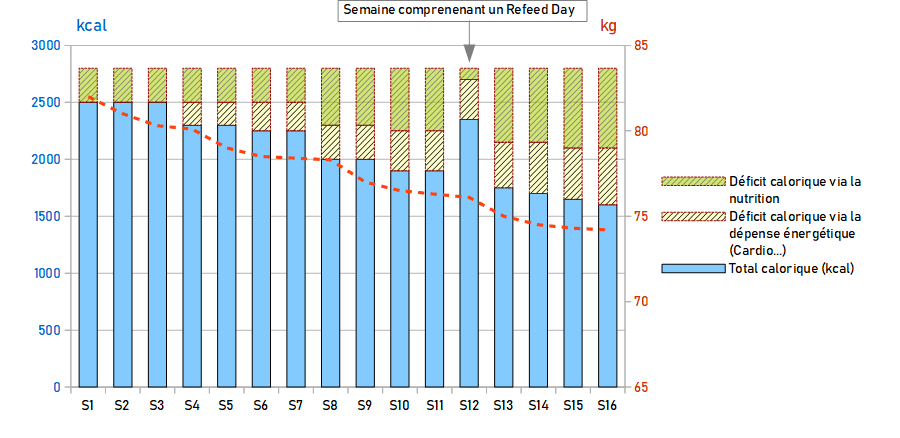
My dryer could broadly be summarized by the diagram below. I first lowered my calorie intake, then introduced more and more cardio, while trying to keep a consistent bodybuilding program (despite the lockdown). To finish, I played both on the reduction in my caloric intake and increasing my cardio sessions, with a Refeed Day in the middle of it all.
important thing, your daily physical activities (excluding sports activities) can greatly contribute to your fat loss.
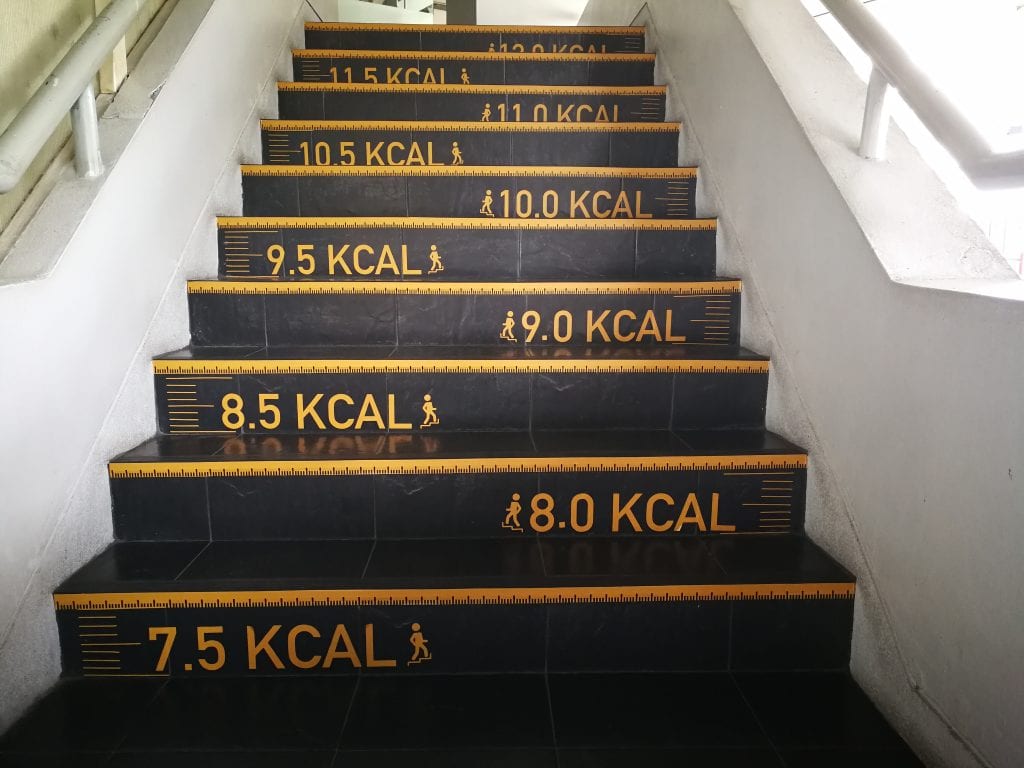
Small habits like taking the stairs instead of the elevator, walk regularly, tinker etc.. result in significant energy expenditure, when they are put together.
Conclusion
Losing fat is not a complicated thing on paper. It is rather the implementation that can be complex, because it is easy to fall into certain traps.
Manger “healthy” does not necessarily mean you will lose fat. Not watching your calories, it's letting go of little things that can eventually make you gain weight, even if you feel like you're not crazy about your diet.
This can easily be illustrated with the example below. : a typical day for an average person who decides to do a little degreasing.
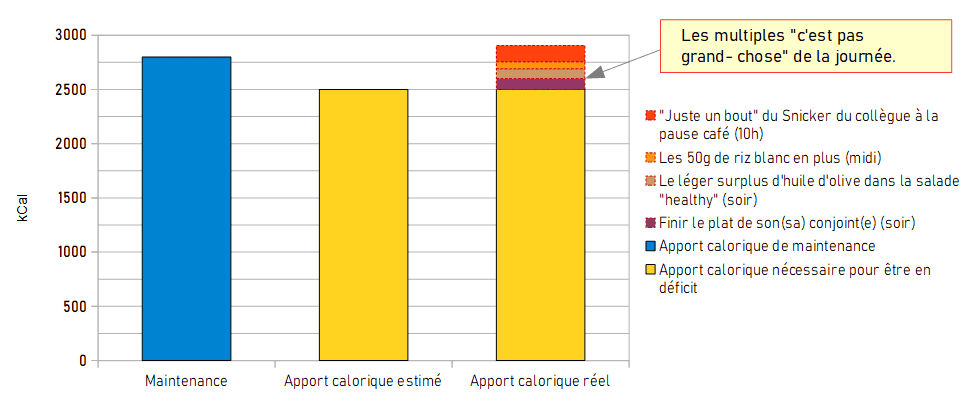
She will gain weight eventually..
Points importants / Reminders :
- Calories are the most important factor in weight management.
- You don't have to starve yourself to lose fat. It's not always about to eat less (régime), but also of eat better (food rebalancing).
- Our body needs carbohydrates to function normally.. Do not delete them completely ! Consume higher quality carbs instead, which come from food not processed by the food industry.
- Don't Blindly Follow Your Neighbor's Diet. It doesn't necessarily have the same calorie maintenance and metabolism as you. One person's calorie deficit is another person's calorie surplus..
- Be sure to drink plenty of water (several liters per day). Sometimes you feel hungry, when we are just dehydrated. Not drinking enough can lead to eating more than necessary.
- Don't just do cardio. Also do weight training.
- Faire 1000 abs a day will only do you NOT lose belly fat. Faire 5000 squats a day will only make you NOT lose thigh fat. We can not target body fat loss. It is done all over the body, starts in different places depending on the person (visage, bras, chest …), then at the end, at belly level.
- Sport does not burn gras. Sport burns calories. And it's the calorie deficit that makes you lose fat. A workout is not “fat burner” only if it puts you in a calorie deficit.
- Your weight will not come down linear way. There will even be days when it rises slightly. Weigh yourself in the morning, with an empty stomach, after going to the toilet. Then take stock all the 2 weeks and not all 2 days.
- Prepare your own meals as often as possible. It's much harder to track your calories when you eat out a lot.
Thank you for reading this article till the end !
See you soon on the blog !